
Quality and CAPA Closeout Reference: From NCR Intake to Verified Resolution
This reference case study maps how industrial quality teams can keep NCR, CAPA, complaints, and final closure under one reviewable workflow.
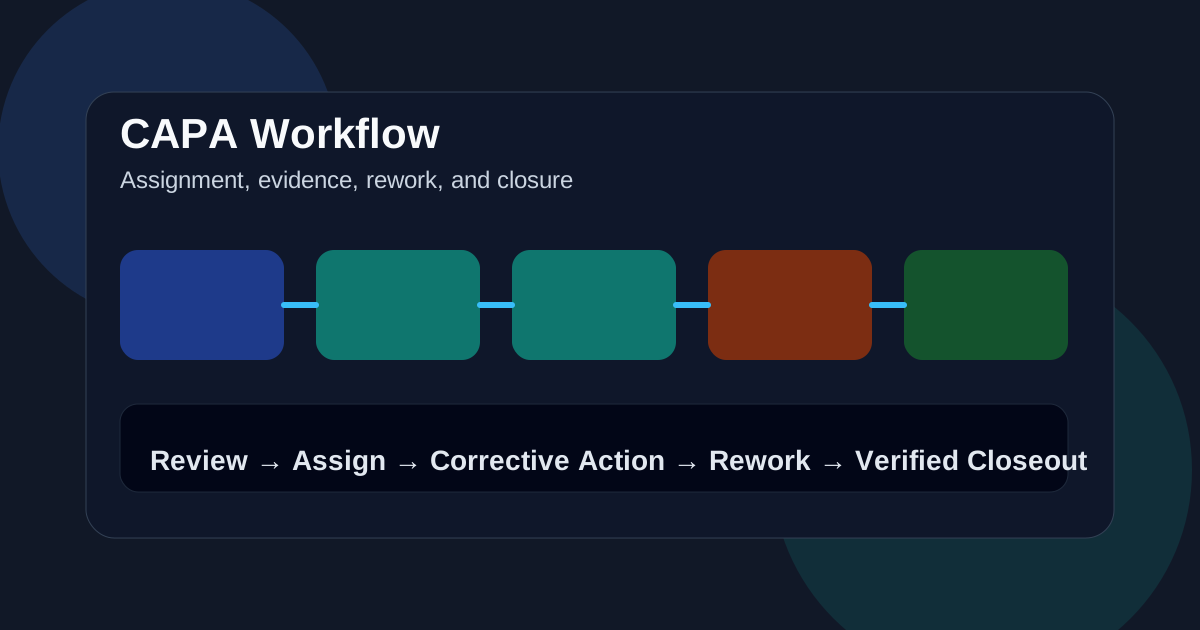
Reference workflow for multi-department industrial quality operations
A quality operating model where non-conformities can start from inspection, audit findings, field returns, or customer complaints and still need one accountable path to closure.
This page reflects a reference workflow grounded in product behavior and industrial operating patterns. It is not a public customer performance claim.
A reference case study should clarify the operational fit before a pilot starts.
These proof pages focus on operating context, workflow design, and measurable outcomes instead of unverified vanity metrics.
ISO-aligned and OSHA PSM-supporting workflows
Sophtri is designed around structured approvals, documented information, corrective action, and audit-ready operational records.
Built for power, oil and gas, petrochemical, manufacturing, mining, and construction
The platform is positioned for industrial operations where work control, traceability, and role-based accountability matter every day.
Incidents, JSA, permits, CAPA, audits, and maintenance in one operating model
Teams can move from issue capture to approval, execution, verification, and closeout without rebuilding the record trail in separate tools.
Permit turnaround, CAPA aging, audit preparation, and closeout evidence
Proof conversations stay anchored in measurable operational outcomes instead of generic software feature claims.
What the team needs to get under control first.
Capture NCR context once and preserve it through investigation and disposition.
Assign CAPA to the right department, user, or role with visible due dates.
Return weak evidence for rework instead of closing records prematurely.
Keep complaints, corrective action, and effectiveness review on one traceable chain.
A controlled path from issue intake to verified closeout.
Log the NCR
The deviation is captured with source, severity, affected item, and containment needs already attached to the record.
Contain and review
Immediate actions, quarantine decisions, and review ownership are documented before the team moves into CAPA.
Assign corrective action
The system routes the action to the accountable role or department instead of leaving the issue operationally unowned.
Verify evidence
Uploaded proof can be accepted, returned for rework, or escalated without losing the review history.
Close with effectiveness review
The final decision checks whether the action actually solved the problem before the record is closed.
The operational shifts a buying team would track during a pilot.
Targeted before-and-after changes
Metrics to review every week
Shows where actions are blocked by role, team, or review state.
Highlights records closed without enough verification discipline.
Preserves the chain from customer impact to corrective action.
The proof is in cleaner handoffs, stronger review states, and better closeout discipline.
Quality teams need workflow discipline as much as they need root-cause tools.
A closed record without strong evidence does not reduce operational risk; it just hides it.
Linking NCR, CAPA, complaints, and final review makes audits and customer follow-up much easier to defend.
Use this case study as a bridge into the pages buyers usually need next.
Quality Management System
See the full QMS workflow that connects NCR, CAPA, complaints, and closure.
Explore page →
Audit Management Software
Review how findings, follow-up, and evidence stay linked across reviews.
Explore page →
Quality Blog Guide
Read the longer explainer on NCR, CAPA, and complaints inside AIO-ASMS.
Explore page →
Sophtri vs Spreadsheets
See why spreadsheet-based quality tracking breaks under review pressure.
Explore page →