
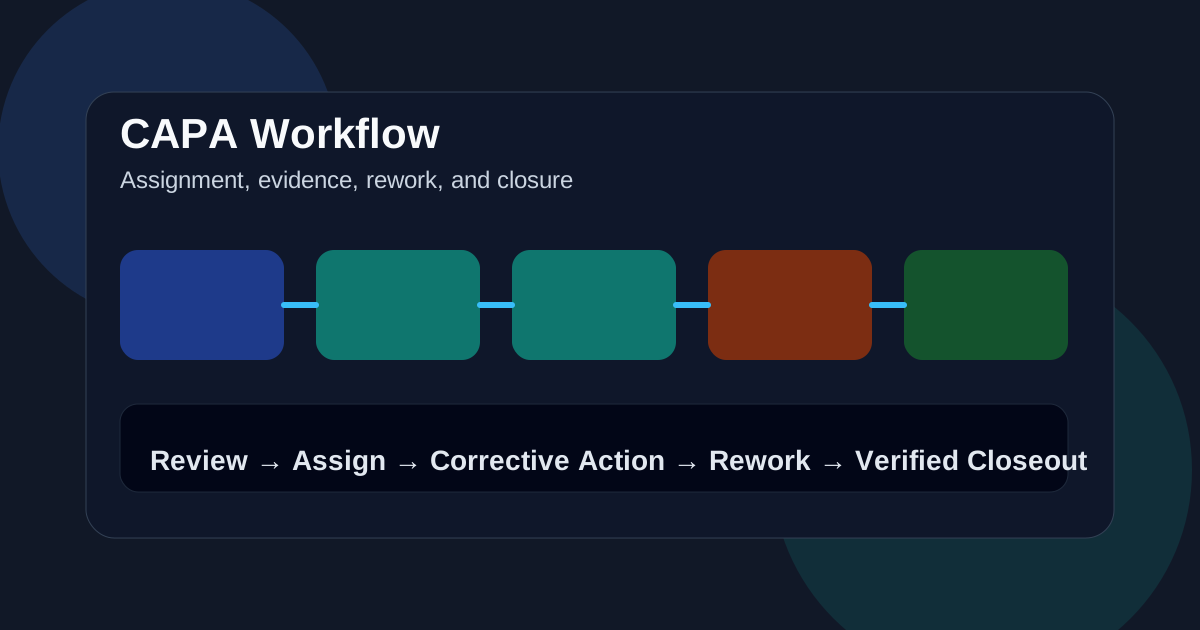
CAPA only looks simple when teams describe it at a high level. In practice, corrective action breaks down when ownership is vague, evidence is weak, and closure happens before anyone checks whether the action actually solved the problem.
Why CAPA needs workflow discipline
A CAPA is not just a form that captures root cause. It is a controlled sequence that should answer five questions:
- who reviewed the issue
- who owns the action
- what evidence was submitted
- what happened when the evidence was not strong enough
- who approved final closure
Without that sequence, teams can claim improvement without proving it.
What the workflow should look like
The strongest industrial CAPA workflows usually include:
- record creation and submission
- review and assignment
- corrective action submission
- return for rework if evidence is weak
- resubmission with stronger proof
- closure approval
- final lifecycle history
That is exactly where many spreadsheet-driven CAPA processes struggle.
Why assignment matters more than teams expect
A CAPA can be technically open but operationally unowned. Good workflow software forces the review step to assign the record to a department, user, or role. That matters because the person implementing the action is rarely the same person who identified the issue.
Rework is not failure
One of the most important signals in a strong CAPA system is the ability to return a corrective action for rework. If the action package is weak, incomplete, or unsupported by evidence, the reviewer should be able to send it back with notes instead of closing it anyway.
That protects the process from cosmetic closure.
What evidence should travel with the CAPA
For industrial teams, the closure package usually needs more than a one-line comment. Reviewers often need some combination of:
- corrective-action description
- containment actions
- root-cause summary
- effectiveness criteria
- implementation notes
- supporting attachments or sign-off evidence
If those items are scattered across email and shared folders, the CAPA is harder to trust.
Why the final history matters
The best CAPA systems preserve the path the record took:
- submitted
- approved
- assigned
- returned
- resubmitted
- closed
That timeline is useful for internal audits, management reviews, and future investigations. It also helps teams understand whether the process is working or just moving records forward.
CAPA should not be isolated from the trigger source
A CAPA is stronger when it stays linked to the thing that triggered it. That might be a nonconformity, complaint, audit finding, safety event, or KPI deviation. The closer that relationship stays, the easier it is to explain the reason for the action and the business impact of the fix.
What to ask when you evaluate CAPA software
Ask whether the system can:
- route the record into approval and assignment
- support return for rework
- capture action evidence and effectiveness criteria
- preserve the final timeline
- connect the CAPA to NCR, complaint, audit, or safety context
Those questions usually reveal whether the workflow is real or just cosmetic.
**About Sophtri**: AIO-ASMS supports QMS workflows for NCR, CAPA, complaints, inspections, rework, closure approval, and full lifecycle history across industrial teams.